
Children Do Not Need Miniature Adult Shoes
Children’s footwear is often chosen based on appearance, brand recognition, or how difficult the shoe is to remove. Fit is commonly reduced to length: if the child’s toes are not touching the front, the shoe is assumed to fit. That approach misses width, toe shape, volume, flexibility, and how the child actually moves inside the shoe.
Children’s feet are developing structures. Their bones, muscles, tendons, sensory systems, and movement strategies adapt to the stresses repeatedly placed upon them. Footwear is not the only influence on development, but it is one of the few environmental factors children may experience for many hours every day.
The problem with narrow and overly controlling footwear
A shoe can be long enough while still compressing the great toe and fifth toe toward the center. It can also be so stiff that the child’s foot cannot bend at the forefoot or adapt naturally to the ground. Heavy motion-control features may be appropriate in specific clinical situations, but they should not be treated as universally beneficial for every developing child.
The goal is not to place every child in the thinnest shoe possible. The goal is to provide adequate room, appropriate flexibility, secure fit, and enough protection for the environment.
The five features I look for
A toe box shaped like the child’s foot, with room for all five toes.
Adequate internal length, including growth room without excessive sloppiness.
A secure heel and instep so the child does not grip with the toes to keep the shoe on.
A sole that bends at the forefoot and allows some torsional movement.
A low, level platform without unnecessary heel elevation.
Fit matters more than the label
A shoe marketed as barefoot can still be too narrow, too shallow, or too loose at the heel for a specific child. Foot shape varies early: some children have broad square forefeet, some taper toward the smaller toes, some have high-volume feet, and others have narrow heels.
Measure both feet while the child is standing. Use the larger measurement, check the manufacturer’s internal dimensions, and reassess regularly. Young children can outgrow shoes before obvious complaints appear.
Brands worth knowing
Softstar is particularly strong for infants, toddlers, and children needing very flexible shoes and broad toe room. Be Lenka, Froddo Barefoot, Bundgaard, Koel, Mukishoes, Splay, Ten Little, Plae, Pediped’s more flexible models, Freet, and several European children’s brands now offer practical foot-shaped options.
The best brand depends heavily on foot volume. A broad shoe that fits one child beautifully may be too loose through the heel and instep for another. Families should avoid buying solely from a “best kids shoe” list without checking shape and measurements.
Do children need cushioning?
Young children walking on normal indoor and outdoor surfaces generally do not need thick athletic foam simply because adults are accustomed to it. Older children participating in high-volume court sports, running, or prolonged activity on hard surfaces may prefer or benefit from more protection. The shoe should match the activity and the child’s tolerance.
When more support may be appropriate
Some children have pain, neurologic conditions, significant hypotonia, rigid deformity, recurrent instability, or a medical need for orthoses or bracing. In those cases, footwear may need greater structure, depth, or compatibility with a device. Foot-shaped principles remain useful, but they do not override individualized clinical needs.
The school-shoe problem
School shoes must survive pavement, playground abrasion, wet grass, repeated fastening, and rapid growth. The ideal option is not always the thinnest or most expensive shoe. Durability, replaceable insoles, simple closures, and a secure heel matter. A practical school shoe that allows toe movement is more useful than an ultra-minimal shoe the child refuses to wear.
What parents should watch
Red marks around the toes or across the top of the foot.
The great toe being pushed inward.
The child repeatedly removing the shoes or asking to be carried.
Toe gripping, heel slippage, or an altered running pattern.
Uneven wear that appears quickly.
Pain, limping, numbness, or activity avoidance.
Final thoughts
It is fantastic that there are now many barefoot and foot-shaped brands from which families can choose. It is especially encouraging that the children’s market has expanded. For years, many children spent their developmental stages in shoes that were narrow, stiff, or more controlling than their needs required.
Children’s bodies adapt to the stresses placed upon them. Their feet deserve enough room and movement to participate in that adaptation. This does not mean every child should be barefoot all day or that structure is never appropriate. It means footwear should respect development rather than automatically restricting it.
Parents now have the opportunity to choose shoes based on the child in front of them—not simply the shape the footwear industry decided every foot should fit.
Continue in the Footwear Lab
Next: How to Transition Into Barefoot Shoes Without Getting Hurt.
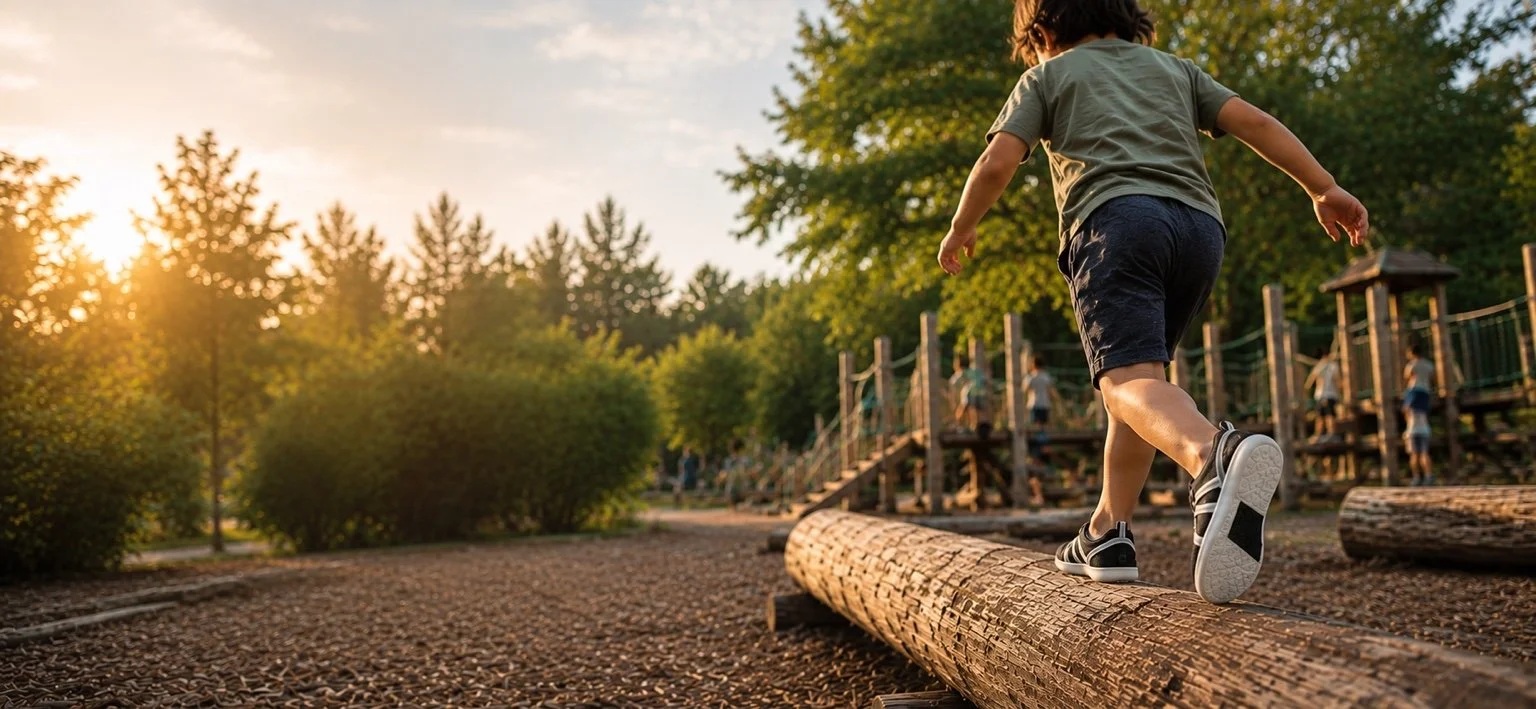
The Best Barefoot Shoes for Kids—and What Parents Should Look For
The Training Room Footwear Lab • Volume III of VI