
The Shoe Changes Immediately. Your Tissues Do Not.
The most common transition mistake is assuming that because a minimalist shoe feels comfortable while standing in the store, the body is prepared to use it for the same mileage, speed, terrain, and duration as the previous shoe.
A zero-drop, flexible shoe changes demands at the ankle, calf, Achilles tendon, forefoot, and intrinsic foot muscles. The sensory experience changes immediately, but biological adaptation occurs over weeks and months.
Start with the easiest activity
For most active adults, short periods of daily walking and controlled strength training are better starting points than running. A broad, flat shoe can be introduced during squats, deadlifts, balance exercises, and short errands without immediately adding thousands of repetitive steps.
A practical progression
1. Week 1: Wear the shoes for 30–60 minutes during low-demand daily activity on alternating days.
2. Week 2: Add short walks of 10–20 minutes and selected gym sessions.
3. Weeks 3–4: Increase total wear time gradually if symptoms return to baseline by the next day.
4. Weeks 5–8: Add longer walks, uneven surfaces, and more dynamic training one variable at a time.
5. Running: Begin only after walking and daily wear are well tolerated; use very short intervals and preserve the previous running shoe for most volume initially.
This is not a rigid universal schedule. Some people need less time; others need substantially more. The key variable is response, not the calendar.
Do not change everything at once
Avoid simultaneously changing footwear, running form, cadence, weekly mileage, training surface, and strength program. When symptoms appear, it becomes impossible to determine which change created the overload.
Normal adaptation versus warning signs
Mild, symmetrical muscle soreness in the calves or feet that resolves normally may reflect adaptation. Focal bone pain, worsening Achilles pain, swelling, night pain, numbness, a limp, or symptoms that intensify from session to session are reasons to reduce exposure and seek evaluation.
Strength work that supports the transition
Slow calf raises with both straight and bent knees.
Short-foot or arch-control exercises without curling the toes.
Single-leg balance with relaxed toes.
Controlled split squats and step-downs.
Toe flexion and extension mobility.
Gradual hopping and landing drills after basic walking tolerance is established.
Mobility is not the entire answer
Limited ankle dorsiflexion can influence gait, but aggressively stretching the calf while also increasing barefoot exposure may irritate the same tissues being loaded. Capacity, coordination, and progression are often more important than chasing a particular range-of-motion number.
Use a rotation
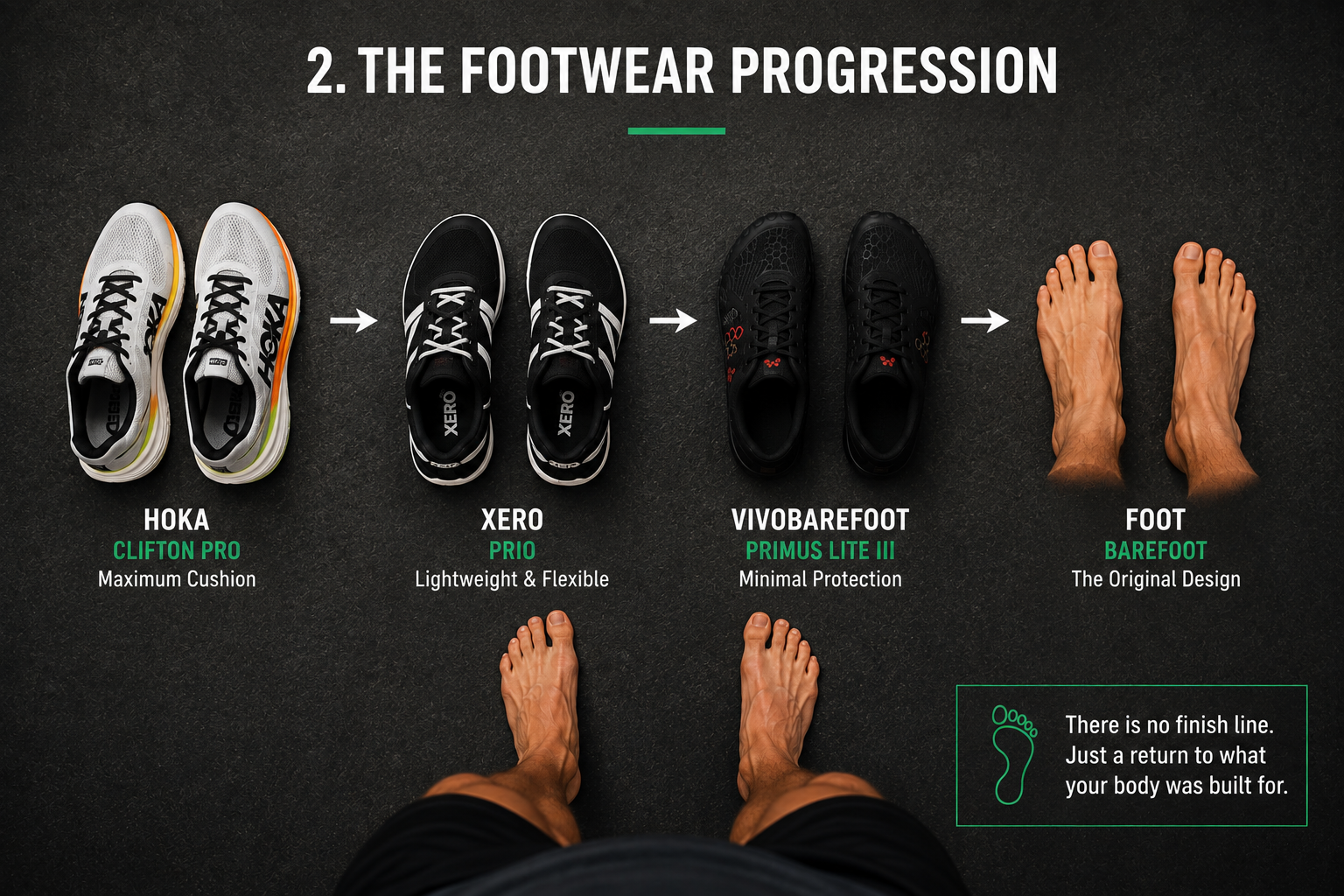
Keeping a cushioned shoe is not cheating. A rotation allows you to distribute load, preserve higher training volume, and use different tools for different tasks. Minimalist shoes can be used for strength and shorter walks while cushioned shoes remain available for long days or running.
Who should be especially cautious?
People with diabetes and reduced sensation, active stress injuries, significant peripheral neuropathy, recent foot or Achilles surgery, severe balance impairment, open skin wounds, or rapidly progressing pain should not experiment casually. Clinical guidance is appropriate.
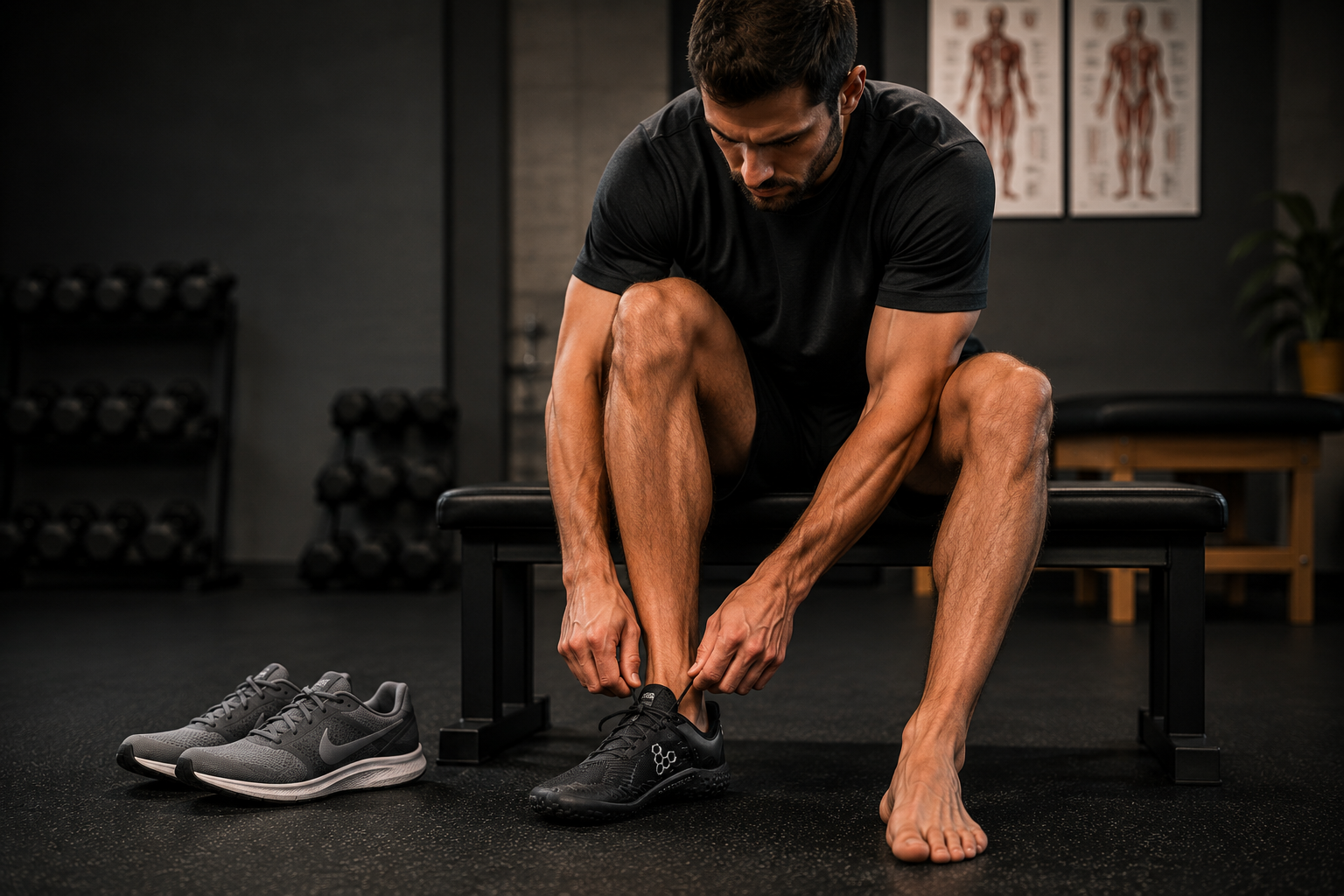
How to Transition Into Barefoot Shoes Without Getting Hurt
The Training Room Footwear Lab • Volume VI of VIII
Final thoughts
The goal of a transition is not to prove toughness. It is to expand what the foot and lower leg can tolerate. The body adapts when the stimulus is large enough to matter but small enough to recover from.
Minimalist footwear is a new training input. Treat it with the same respect you would give a new lifting program or a sudden increase in running volume.
Volume VII: The 15 Biggest Mistakes People Make When Transitioning to Barefoot Footwear