
Better Movement Starts From The Ground Up.
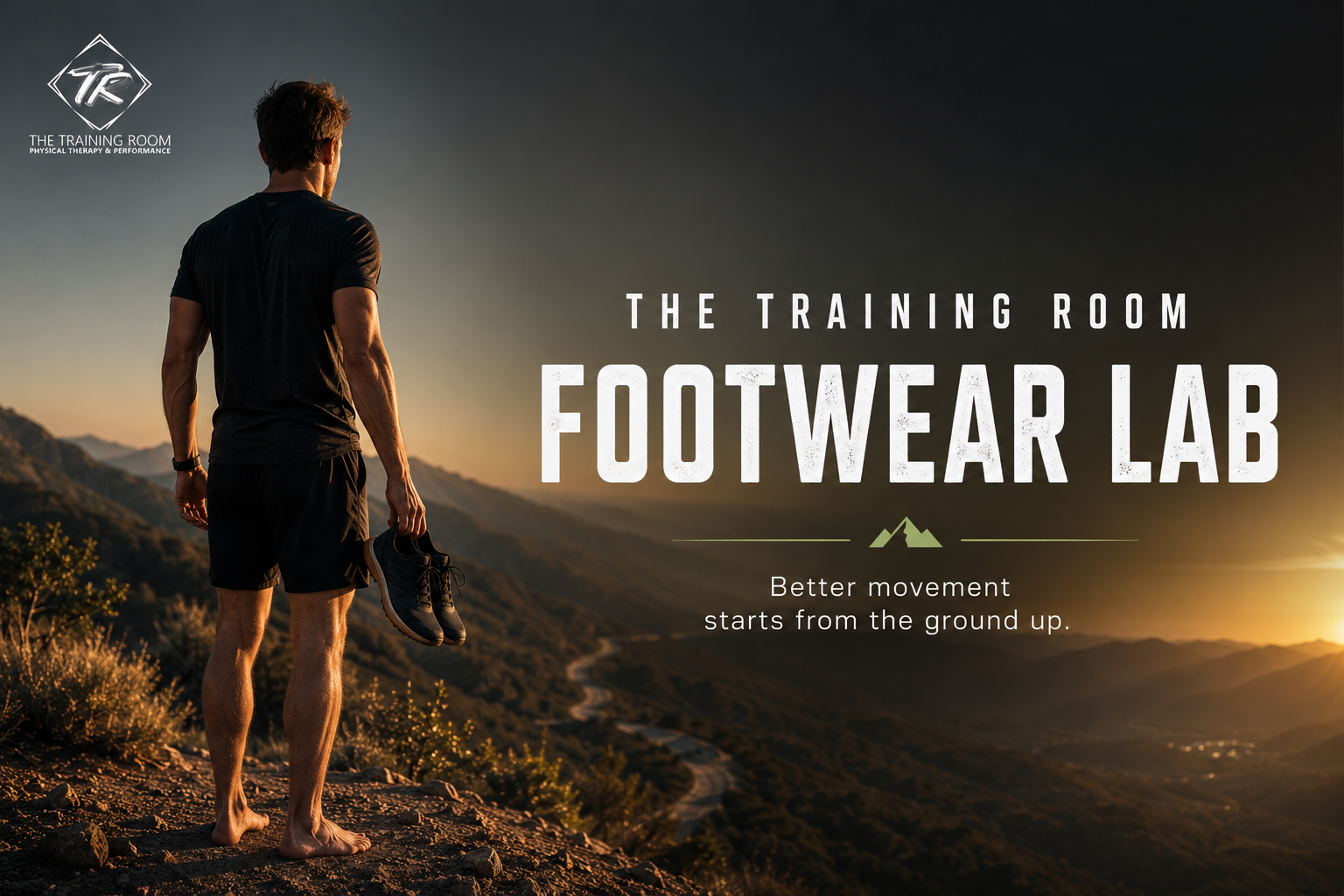
Independent footwear reviews, biomechanics, and clinical insight from a physical therapist.
Built for feet. Not for Marketing.
The purpose of the Footwear Lab is not to convince you to buy a particular shoe.
It is not to tell you that one company has all the answers.
And it is not to suggest that there is a single “correct” way for everyone to move.
Our promise is much simpler.
We will do our best to separate evidence from opinion, explain biomechanics in a way that is understandable, acknowledge uncertainty where it exists, and evaluate footwear with curiosity rather than bias.
If, by the end of this curriculum, you feel more confident asking better questions about footwear than when you began, then we have accomplished exactly what we set out to do.
Why I Built the Footwear Lab
After finishing my first full marathon, I thought my feet were one of the strongest parts of my body. Then, out of curiosity, I slipped on a pair of barefoot shoes and barely made it seven minutes before my feet and calves were burning. Surprisingly, my usual knee and hip pain had almost disappeared. As a physical therapist, that experience completely changed the questions I was asking. Instead of wondering whether barefoot shoes were better, I wanted to understand why they felt so different.
That curiosity led me down a rabbit hole of biomechanics, movement science, and footwear design. I began researching dozens of brands, comparing shoe construction, and digging into the evidence behind how footwear influences the way we move. The Training Room Footwear Lab is the result—a place where shoes are evaluated through the lens of clinical experience, biomechanics, and current research to help you find the right shoe for your feet, your goals, and your lifestyle.
What Makes the Footwear Lab Different?
-
People Before Products
We begin with the individual and the activity, not the company or the trend.
-

Evidence separated from Opinion
Published research, clinical interpretation, manufacturer claims, and informed product assessment are clearly distinguished.
-
Tradeoffs stated Honestly
Every shoe includes compromises. Each review explains who it may suit and who should probably skip it.
-
The Entire Body Matters
Width is not enough. Toe shape, midfoot volume, heel security, flexibility, traction, and underfoot protection all influence fit and performance. In fact, because the entire body is impacted by footwear, we take extra considerations of how everything is effected.
-
A Living Resource
Models, lasts, materials, and evidence change. Footwear Lab recommendations should be reviewed and updated over time.
-
Movement, not Marketing
Marketing tells you what a company wants you to believe about a shoe. We want to understand what the shoe actually asks your body to do.
Every assessment begins with one simple question: How does this shoe influence human movement?
The Series
-
I never expected a simple change in footwear to challenge everything I thought I knew about running and human movement. What began as curiosity after finishing my first marathon quickly turned into an obsession with biomechanics, foot function, and how different shoes influence the way we move. This article tells the story that started it all—and why it ultimately led to the creation of the Training Room Footwear Lab.
-
Most people who make the switch to barefoot shoes focus on the obvious features: a wide toe box, flexible sole, and minimal heel-to-toe drop. But what if your socks are quietly undoing some of that work? The toes play an important role in balance, stability, arch function, and propulsion, yet we routinely compress them together for hours at a time without giving it much thought.
This article looks beyond the shoe itself and explores toe socks, toe spacers, and the importance of allowing the toes to move independently. We’ll separate the growing hype around toe spacers from what the research actually supports, while explaining why simply creating more space isn’t enough.
-
Footwear is one of the most debated topics in running and rehabilitation, yet the science is often oversimplified or taken out of context. The truth is that both barefoot and cushioned shoes have advantages, tradeoffs, and appropriate uses depending on the individual and the activity. This article separates research from opinion to help you better understand what the evidence actually says.
-
Children’s feet are designed to move, adapt, and develop naturally, yet many modern shoes restrict that process from an early age. Choosing footwear for a growing child can feel overwhelming with so many options and opinions available. In this guide, I’ll explain what really matters when evaluating children’s shoes and review the brands that best support healthy foot development.
-
If you’ve read much of what I’ve written about barefoot shoes, you might assume I believe traditional footwear is inherently bad for your feet. I don’t. Shoes are tools, and different tools make sense for different people, activities, and stages of life. I regularly recommend more traditional footwear—including shoes like the Altra Escalante—when I believe they are the right choice for the person in front of me. My goal isn’t to convince everyone to wear less shoe; it’s to help people understand how footwear influences movement, recognize the trade-offs that come with different designs, and ultimately choose the least amount of shoe that allows them to comfortably and safely do what they want to do.
-
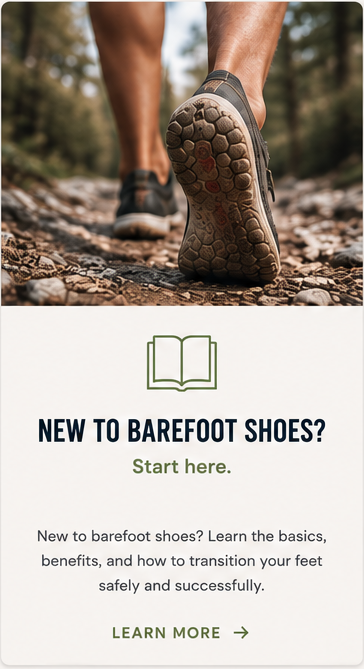
One of the biggest mistakes people make isn’t buying barefoot shoes—it’s trying to wear them all day on the very first day. Transitioning successfully requires patience, gradual exposure, and an understanding of how your muscles, tendons, and joints adapt to new demands. This guide will help you make the switch safely while avoiding the setbacks that cause many people to give up too soon.
-
Switching to barefoot shoes can be one of the best decisions you make for your feet—or one of the quickest ways to end up with an overuse injury. Most problems aren’t caused by the shoes themselves but by how people introduce them into their daily lives. In this article, I’ll cover the most common mistakes I see and explain how to avoid them so you can enjoy the benefits without unnecessary setbacks.
-
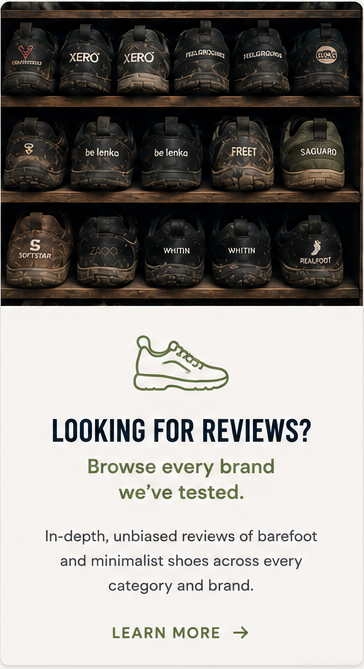
Barefoot shoes have exploded in popularity, and there are now dozens of companies making footwear that looks remarkably similar—but performs very differently. After researching and comparing brands from around the world, I discovered that no single shoe is perfect for everyone. This review breaks down the strengths, weaknesses, and ideal uses for today’s leading barefoot shoe companies so you can find the one that best matches your feet and your lifestyle.
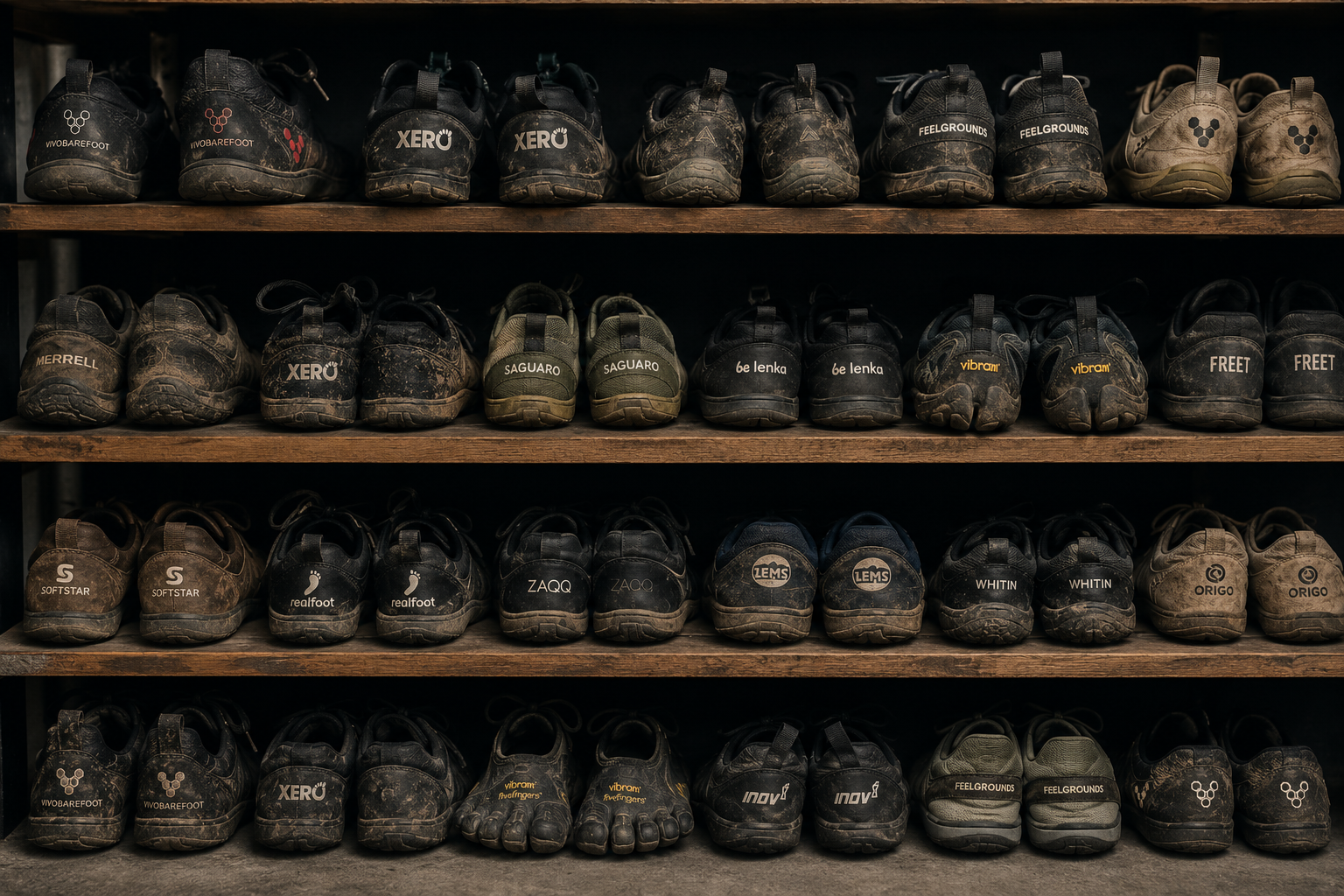
Independent Footwear Reviews. Clinical Insight. Better Movement.
Helping you choose footwear that matches your body—not just the marketing.
Choosing shoes should not require sorting through exaggerated promises, sponsored rankings, and one-size-fits-all advice. As a physical therapist, I created The Training Room Footwear Lab to look beyond the label on the box and evaluate what a shoe actually asks the body to do.
The Lab combines biomechanics, clinical reasoning, current research, product specifications, and honest assessment of real-world performance. The goal is not to convince everyone to wear barefoot shoes—or any single category of footwear. It is to help athletes, parents, professionals, hikers, and everyday walkers make better decisions based on their feet, their activities, and their current capacity.