
Healthy Feet Start Young: A parent’s guide to choosing footwear that protects growing feet without unnecessarily limiting movement.
Children Do Not Need Miniature Adult Shoes
Children’s footwear is often chosen based on appearance, brand recognition, or how difficult the shoe is to remove. Fit is commonly reduced to length: if the child’s toes are not touching the front, the shoe is assumed to fit. That approach misses width, toe shape, volume, flexibility, and how the child actually moves inside the shoe.
Children’s feet are developing structures. Their bones, muscles, tendons, sensory systems, and movement strategies adapt to the stresses repeatedly placed upon them. Footwear is not the only influence on development, but it is one of the few environmental factors children may experience for many hours every day.
The Problem With Narrow and Overly Controlling Footwear
A shoe can be long enough while still compressing the great toe and fifth toe toward the center. It can also be so stiff that the child’s foot cannot bend at the forefoot or adapt naturally to the ground.
Heavy motion-control features may be appropriate in specific clinical situations, but they should not be treated as universally beneficial for every developing child.
The goal is not to place every child in the thinnest shoe possible. The goal is to provide adequate room, appropriate flexibility, secure fit, and enough protection for the environment.
The Five Features I Look For
A toe box shaped like the child’s foot, with room for all five toes.
Adequate internal length, including growth room without excessive sloppiness.
A secure heel and instep so the child does not grip with the toes to keep the shoe on.
A sole that bends at the forefoot and allows some torsional movement.
A low, level platform without unnecessary heel elevation.
Why I Prefer a Backstrap on Sandals
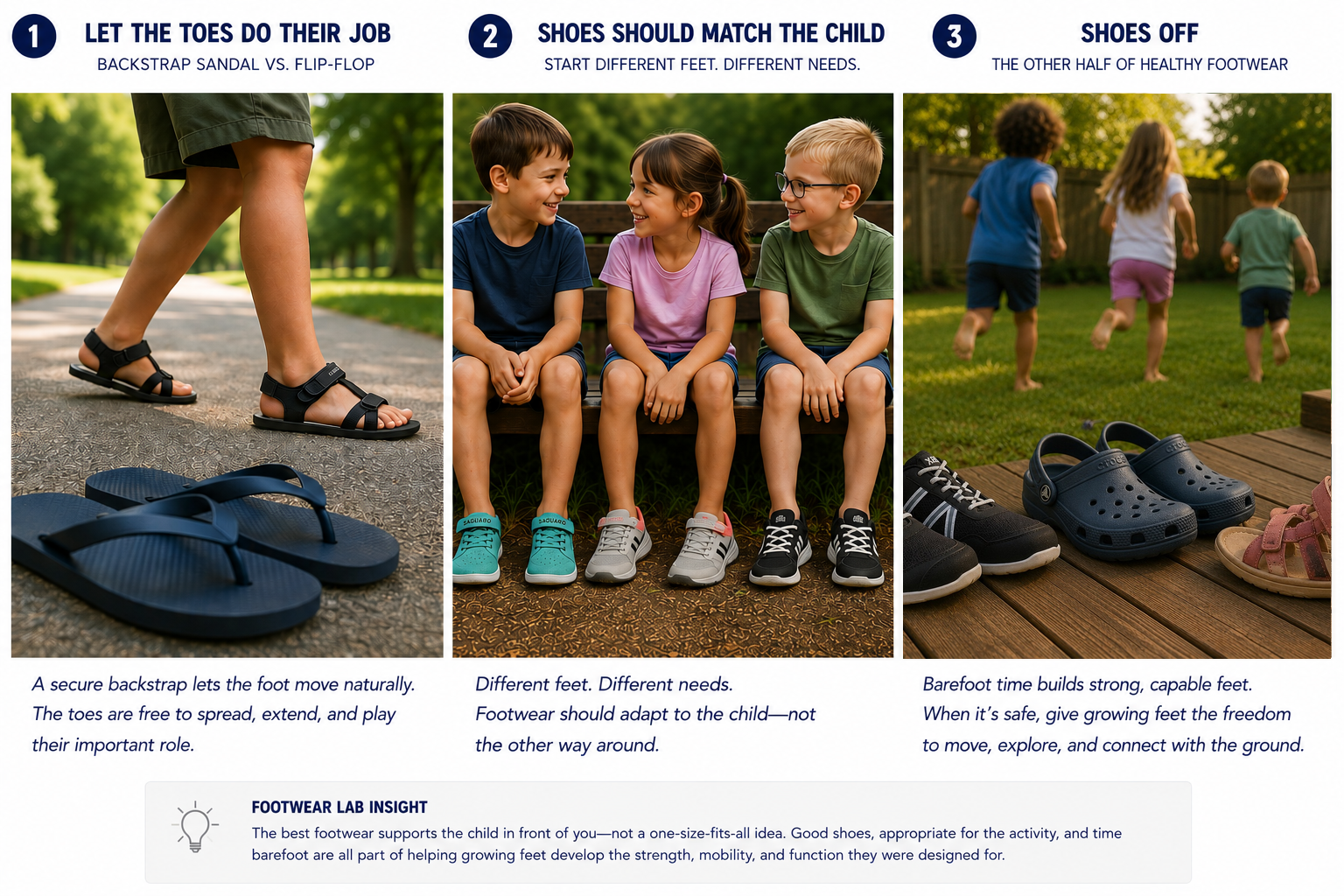
Slides and thong-style flip-flops do not provide much security around the heel, which means the foot often has to work differently simply to keep the shoe attached while walking.
With loose footwear, children may grip or flex their toes to help hold the sandal in place. That is almost the opposite of what I want during normal gait. As we move over the foot, the great toe should be able to extend while the plantar fascia and intrinsic muscles contribute to creating a stable, increasingly rigid foot for push-off. Continually asking the toes to grip the shoe can interfere with that natural sequence.
This is why I generally recommend sandals with a secure backstrap for people of all ages, but especially for children with developing feet. A backstrap allows the sandal to stay attached to the foot without requiring the toes to do that job. The toes are then free to spread, extend, and participate more naturally in walking, running, and play.
That does not mean wearing flip-flops to the pool for a few minutes, or slides from the car to the practice field, is going to damage a child’s feet. As with most footwear decisions, dose and context matter. My concern is when slides or flip-flops become a child’s primary footwear and are worn for hours of walking and activity.
Footwear Lab Parent Takeaway
A child’s toes should help move and stabilize the body—not spend every step trying to keep the shoe from falling off. When choosing sandals, I strongly prefer a secure backstrap.
Fit Matters More Than the Label
A shoe marketed as barefoot can still be too narrow, too shallow, or too loose at the heel for a specific child. Foot shape varies early: some children have broad square forefeet, some taper toward the smaller toes, some have high-volume feet, and others have narrow heels.
Measure both feet while the child is standing. Use the larger measurement, check the manufacturer’s internal dimensions, and reassess regularly. Young children can outgrow shoes before obvious complaints appear.
Brands Worth Knowing
Softstar is particularly strong for infants, toddlers, and children needing very flexible shoes and broad toe room. Be Lenka, Froddo Barefoot, Bundgaard, Koel, Mukishoes, Splay, Ten Little, Plae, Pediped’s more flexible models, Freet, and several European children’s brands now offer practical foot-shaped options.
The best brand depends heavily on foot volume. A broad shoe that fits one child beautifully may be too loose through the heel and instep for another. Families should avoid buying solely from a “best kids shoe” list without checking shape and measurements.
Not Ready for a Full Barefoot Shoe?
Moving toward healthier children’s footwear does not have to be all-or-nothing. Some shoes preserve more of the cushioning and familiar feel of a traditional children’s sneaker while offering significantly more toe room, flexibility, and a flatter platform.
Shoes such as Merrell Bare Steps and selected See Kai Run models can be excellent entry points. Ten Little moves farther toward barefoot design with a foot-shaped toe box, zero-drop platform, and flexible sole, while Splay provides an approachable step into a more genuinely minimalist shoe.
For many families, this middle ground makes sense. I would rather see a child in a comfortable, flexible shoe with adequate toe room than have parents feel they need to immediately place their child in the thinnest barefoot shoe available.
The goal is not to chase a label. It is to progressively remove unnecessary restriction while choosing a shoe that works for the individual child.
When Adaptive Footwear Is the Better Choice
My wife is a pediatric physical therapist, and our conversations around children’s footwear have also reinforced an important point: not every child’s needs are the same. While we both value allowing developing feet room to move and function naturally, she regularly works with children for whom additional stability, support, or adaptive features are appropriate.
For some children, the priority may be accommodating orthotics or braces, improving stability, making shoes easier to put on and take off, or simply providing the additional structure necessary for safe and confident movement. In those situations, choosing the most minimal shoe is not the goal.
One adaptive footwear brand she recommends is Beavos, which offers options designed around the needs of children who may benefit from additional accommodation and support.
This is an important reminder that good footwear is not defined by how little structure it has. It is defined by how well it meets the needs of the child wearing it.
Footwear Lab Insight
Barefoot principles are useful guidelines, not rules. Some children benefit from greater freedom and less restriction; others legitimately need additional support or adaptive footwear. The child should always come before the footwear philosophy.
When More Support May Be Appropriate
Some children have pain, neurologic conditions, significant hypotonia, rigid deformity, recurrent instability, or a medical need for orthoses or bracing. In those cases, footwear may need greater structure, depth, or compatibility with a device.
Foot-shaped principles remain useful, but they do not override individualized clinical needs.
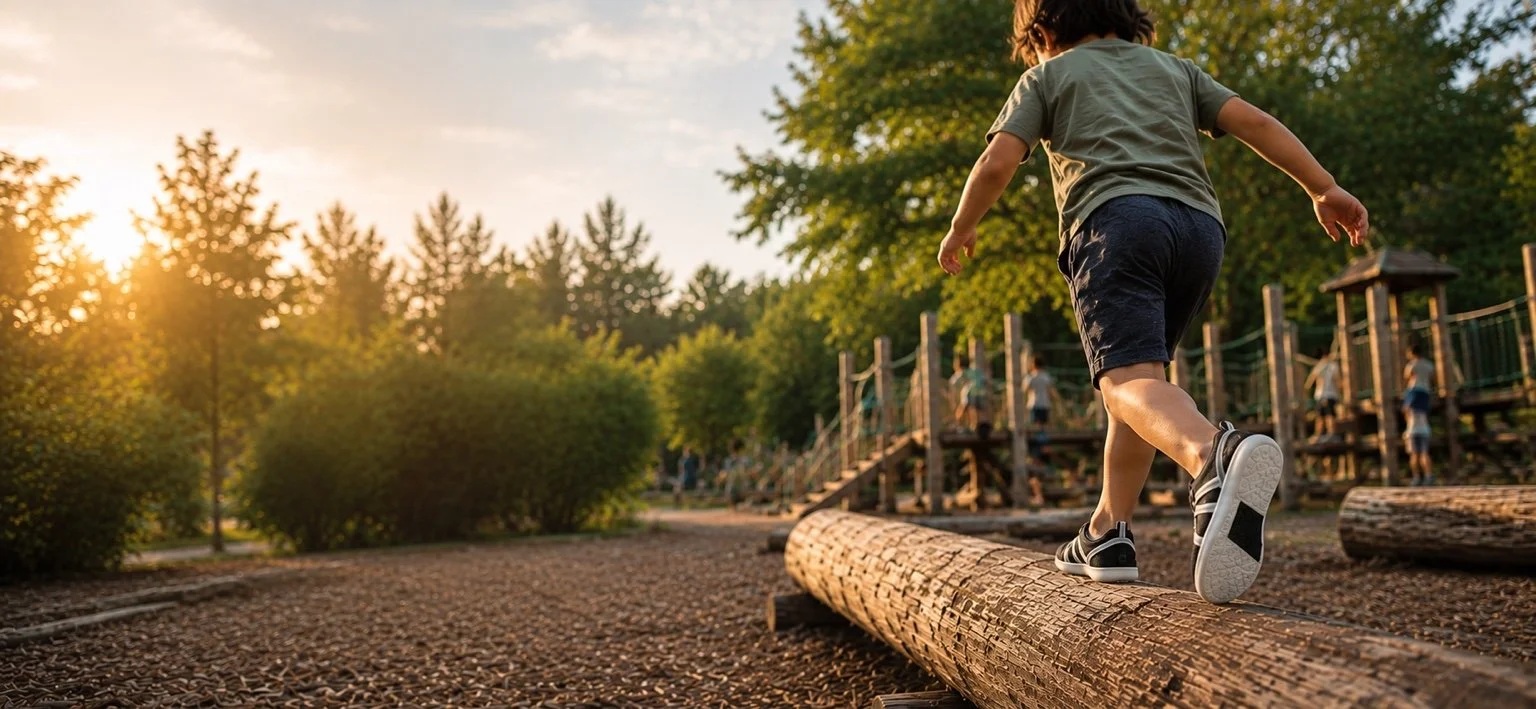
The Best Barefoot Shoes for Kids—and What Parents Should Look For
The Training Room Footwear Lab • Volume IV of VIII
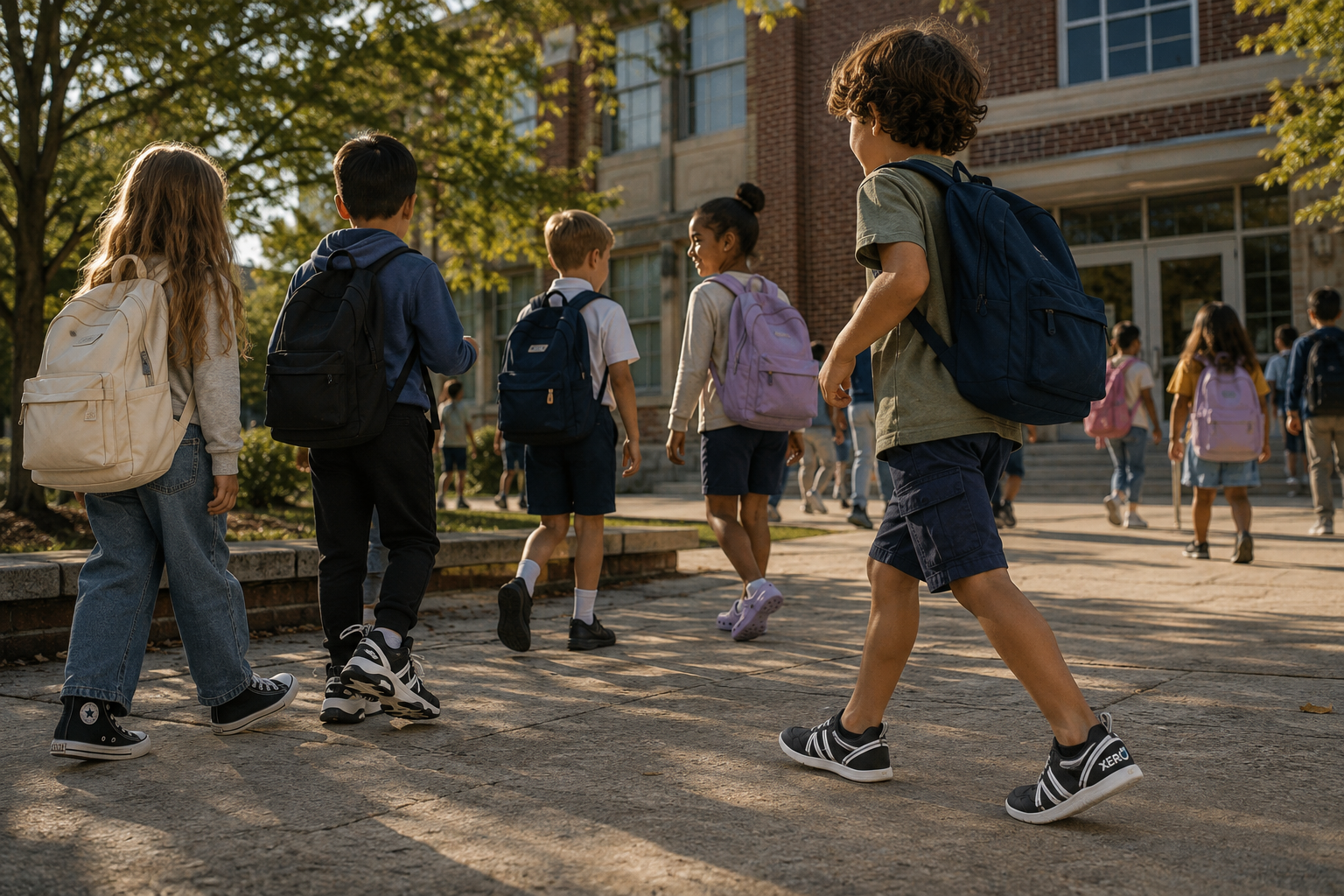
The School-Shoe Problem
School shoes must survive pavement, playground abrasion, wet grass, repeated fastening, and rapid growth. The ideal option is not always the thinnest or most expensive shoe.
Durability, replaceable insoles, simple closures, and a secure heel matter. A practical school shoe that allows toe movement is more useful than an ultra-minimal shoe the child refuses to wear.
School Uniforms and Dress Codes: A Practical Challenge for Parents
A school uniform should not automatically mean compromising on fit.
Many schools have school uniform requirements or strict dress codes that extend to footwear. Children may be expected to wear black, understated, or more traditional-looking shoes.
Fortunately, barefoot footwear has come a long way. Parents no longer necessarily have to choose between a shoe that allows their child’s foot to move naturally and one that meets the requirements of a school uniform.
School-Friendly Barefoot Options
Several barefoot companies now make school-uniform-friendly shoes that preserve many of the features I look for: an appropriately wide toe box, flexible sole, lightweight construction, and minimal heel-to-toe drop, while still looking much more like a traditional school shoe.
Brands such as Lejan, BGreater, Feelgrounds, and Be Lenka offer options worth considering depending on the child’s foot shape and the school’s requirements.
Why This Matters
School shoes may be worn for six or eight hours at a time, five days a week. That makes them one of the highest-exposure pieces of footwear a child owns.
Fit, toe room, comfort, security, and the ability of the foot to move should therefore matter just as much for school as they do for play and sport.
Footwear Lab Insight
A school uniform should not automatically mean compromising on fit. Considering how many hours children spend in school shoes each week, finding a shoe that satisfies the dress code and fits the child’s foot appropriately is worth the effort.
Growing Athletes and Growth-Plate Stress
Why footwear and movement strategy deserve attention during periods of rapid growth.
During periods of rapid growth, the areas where tendons attach near developing growth plates can become particularly sensitive to repetitive loading.
Two conditions I see frequently in young athletes are Sever’s disease, which causes pain around the heel, and Osgood-Schlatter disease, which causes pain near the front of the knee.
Footwear Is One Part of the Loading Environment
These conditions are not simply caused by bad shoes. Growth rate, training volume, sport participation, strength, mobility, recovery, and individual anatomy can all contribute.
But footwear is one part of that loading environment. A poorly fitting shoe, or one that substantially changes ground feedback, stability, or movement mechanics, may influence how a child manages the forces of running, cutting, and jumping.
Cushioning Does Not Eliminate Impact
A softer shoe can make landing feel more comfortable, but feeling less impact is not the same as eliminating load from the body. I want young athletes learning to absorb force through the foot, ankle, knee, hip, and trunk together, using muscular control rather than repeatedly relying on passive joint structures.
That does not mean children should never wear cushioned shoes; it means the shoe should be considered together with the athlete wearing it.
What I Have Seen in the Clinic
Anecdotally, I have seen this pattern many times in my own practice: a young athlete is growing quickly, playing a tremendous amount of sport, and begins developing heel or knee pain.
When I evaluate them, I may also find poor landing mechanics, limited ankle mobility, inadequate lower-extremity strength, poor foot control, or footwear that is not well matched to the child’s foot or activity.
By the time some athletes arrive, symptoms have progressed enough to keep them out of running, jumping, or sport for weeks—and sometimes months. I would much rather address those factors early.
Footwear Lab Insight
Growing bodies are already adapting to enormous change. Good footwear should not create another obstacle; it should allow the foot and the rest of the body to participate naturally in managing the demands of sport.
Give the Foot Time Out of the Shoe
Restrictive footwear may be necessary for the activity. That does not mean the foot should live in it.
Barefoot Time Matters
I strongly believe children should spend time barefoot whenever the environment safely allows it—at home, during play, and on appropriate playground surfaces. But this principle is not limited to children. Kids, athletes, and adults can all benefit from spending time out of their shoes, particularly after spending hours in restrictive footwear.
Some Activities Legitimately Require Restrictive Shoes
Cleats need traction and lockdown during high-speed running and cutting. Rock-climbing shoes are intentionally tight to improve precision and performance on small holds. Work shoes, skates, cycling shoes, and other specialized footwear may also prioritize the demands of the activity over natural foot shape and movement.
That tradeoff may be worthwhile during the activity. The mistake is allowing the restriction to continue when it is no longer necessary.
What I See Clinically
Anecdotally, athletes who spend large amounts of time in cleats and rock climbers are among the people I see with some of the most significant long-term changes in foot shape, toe mobility, and overall foot function.
Their footwear may help them perform, but that does not mean their feet should remain compressed after practice, competition, climbing, or work is over.
Give the Foot the Opposite Experience
When restrictive shoes come off, let the toes spread. Let the foot interact with the ground. Walk barefoot when appropriate. Restore great-toe and ankle mobility. Move the toes. Strengthen the foot. Give the tissues time in positions that are not dictated by the performance shoe. If a child has spent two hours in cleats, they do not necessarily need another highly structured shoe for the rest of the evening.
Think About Cumulative Exposure
Rather than labeling a shoe simply good or bad, consider how restrictive it is, how long it is being worn, what the person is doing in it, and what opportunities the foot gets outside of it.
Footwear exposure is cumulative.
Footwear Lab Insight
A restrictive shoe may be the right tool for the activity. It does not have to become the environment your foot lives in.
The shoe can influence alignment, but appearance alone does not tell us what the child is doing inside it. Watch your child perform real life movements in the shoe.
A Real-World Example
Recently, I watched a child walking in Crocs whose entire leg was internally rotating from the hip with each step. As the leg rotated, the foot followed, while the interaction between the foot, shoe, and ground repeatedly pushed the great toe laterally and placed a valgus-directed stress across the first MTP joint.
To most people it probably looked innocent. To me, I was watching the same undesirable loading pattern occur step after step.
Big and Cushioned Does Not Automatically Mean Stable
Nearby, I watched another child in large, heavily cushioned shoes who still demonstrated significant pronation while walking.
Visually, the shoes looked as though they should provide tremendous support and stability. But when I watched the child move, all of that material did not prevent the motion.
More cushion does not automatically mean more support, and more support does not automatically create better movement control.
Pronation Is Not Automatically the Problem
Pronation is a normal part of how the foot adapts to the ground. I care less about simply seeing pronation and more about whether the child can control it, move into and out of it, and use the foot effectively during walking, running, jumping, and landing.
Bunions Are Not Simply Genetic
Hallux valgus—commonly called a bunion—is often discussed as though genetics alone determines who develops it.
Genetics and inherited anatomy clearly matter, but hallux valgus is multifactorial. Foot shape, first-ray mechanics, pronation, muscle function, repeated loading, (but largely) external pressure from narrow or poorly fitting footwear - can all contribute to the environment in which a developing foot grows.
Give Growing Feet Room—and Time Out of Shoes
I want children barefoot whenever the environment safely allows it: at home, during play, and on appropriate playground surfaces. After time in restrictive footwear such as cleats, give the foot the opposite experience. Let the toes spread, let the foot interact with the ground, and give it opportunities to move outside the shape imposed by the performance shoe.
Footwear Lab Insight
Watch the child move, not just the shoe. A supportive-looking shoe can still allow poor control, while a simple shoe may work beautifully for another child.
Wide Does Not Always Mean Foot-Shaped
A children’s shoe can be labeled wide and still taper inward toward the toes.
Extra width through the forefoot is useful, but I also want the toe box to follow the natural shape of the foot so the great toe and smaller toes have room to maintain their position and spread during movement.
For growing feet, shape matters just as much as the width measurement.
A Child’s Foot Is Still Developing
Children’s feet are not simply smaller adult feet. Their bones continue developing and ossifying while muscles, connective tissues, balance systems, and movement strategies continue adapting throughout childhood.
Footwear is only one part of that environment, but it is an environment a child may spend many hours in every day.
That is why I prefer shoes that provide the protection required for the task without adding unnecessary restriction.
Cleats Are One of the Hardest Categories
As a parent, this is where the problem becomes very real.
Finding a quality cleat below a youth size 1 can be surprisingly difficult. I have dealt with this repeatedly with my own son: every time it is time for a new pair, we are again trying to find a cleat that performs well without unnecessarily squeezing a growing foot.
Traction and lockdown are legitimate performance requirements, but a narrow, tapered toe box should not automatically be the price a young athlete has to pay for them.
Cleats remain one of the more difficult categories because most are narrow, tapered, and relatively rigid. Barefoot-style options are still limited, but companies such as Vincelux, Natur Athletics and Tokay Ultimate show that a more foot-shaped approach is possible. Sport-specific traction and secure lockdown still matter, so cleats should be judged as performance tools rather than expected to feel identical to an everyday barefoot shoe.
Why Natur Athletics Caught My Attention
Natur Athletics is one of the companies trying to approach this problem differently. Its Kids Iron Lion Field Cleat is built around a natural foot shape, true wide toe box, zero-drop heel, flexible midsole, secure heel and midfoot, and a variable-density NaturMotion cleat plate designed to preserve traction while allowing more foot movement.
Importantly for parents of younger athletes, the current kids cleat starts at size 11C—well before the size range where quality cleat choices usually begin to open up.
Research First, Marketing Second
Natur’s research framework emphasizes foot shape, flexibility, cushioning, arch support, sensory input, and neuromuscular control.
Those ideas overlap with many of the principles discussed throughout the Footwear Lab. I would still be careful not to turn a manufacturer’s interpretation of research into a promise that one cleat prevents injury.
The better approach is to use the original research to understand development and loading, then judge the shoe by how well it applies those principles to the individual child and sport.
Footwear Lab Parent Takeaway
Wide is good. Foot-shaped is better. The goal is not simply a bigger shoe—it is space in the places a growing foot actually needs it, while still meeting the demands of the sport.
What I Have Learned From My Own Family
I do not expect one shoe to meet every need. School, everyday play, hiking, and organized sports can require different combinations of protection, security, flexibility, and traction. The goal is not perfection; it is to make thoughtful choices most of the time while preserving opportunities for barefoot play when it is safe.
My own children have worn several minimalist brands as they have grown, including Merrell, Vivobarefoot, Whitin, Splay, Ten Little, and PaperKrane. That experience has reinforced what I see clinically: the label matters less than the fit on the individual child. A shoe that works beautifully for one child may be too shallow, too loose at the heel, or the wrong shape for another.
Footwear Lab Insight
The best children’s shoe is not the one with the most support. It is the one that fits the child, matches the activity, and allows development without unnecessary restriction.
Final Thoughts
It is fantastic that there are now many barefoot and foot-shaped brands from which families can choose. It is especially encouraging that the children’s market has expanded. For years, many children spent their developmental stages in shoes that were narrow, stiff, or more controlling than their needs required.
Children’s bodies adapt to the stresses placed upon them. Their feet deserve enough room and movement to participate in that adaptation.
This does not mean every child should be barefoot all day or that structure is never appropriate. It means footwear should respect development rather than automatically restricting it.
Parents now have the opportunity to choose shoes based on the child in front of them—not simply the shape the footwear industry decided every foot should fit.
Key Takeaways
Children need toe room, appropriate length, secure fit, useful flexibility, and a low platform.
Fit should be checked while standing and reassessed frequently because children may not describe pressure accurately.
Sport footwear may require compromises, but everyday shoes and safe barefoot time can continue to support natural movement.
Volume V: Why I Do Not Believe That Traditional Footwear is Inherently Bad